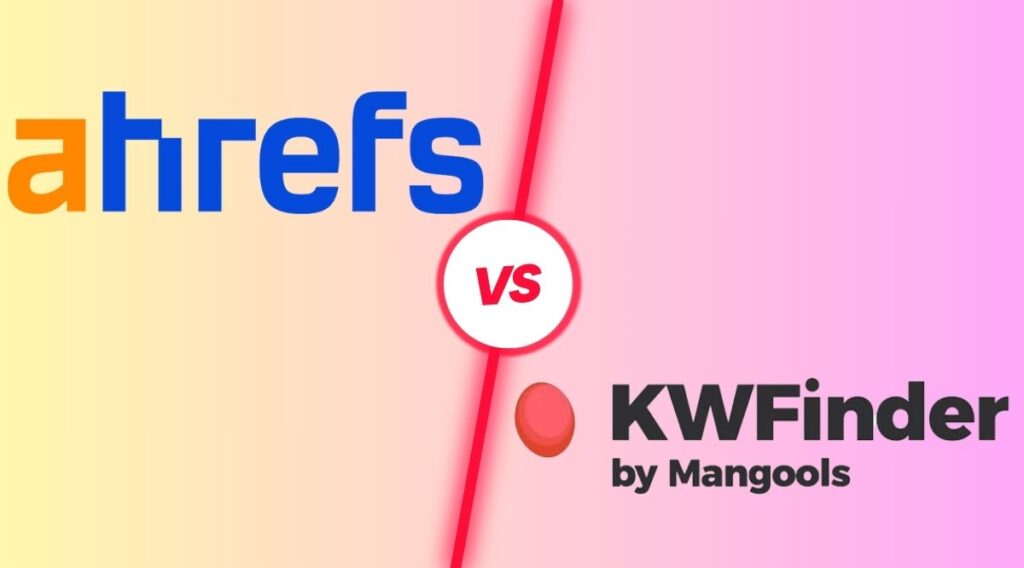
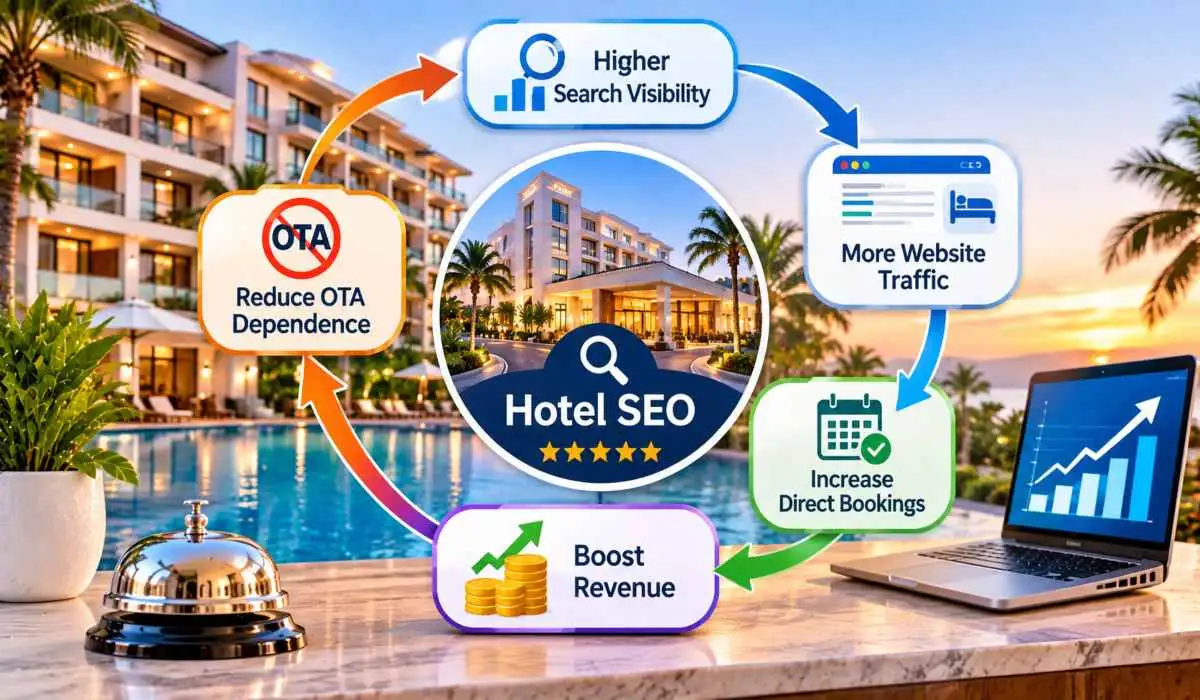
What is SEO for hotels? SEO for hotels is the process of optimizing your website, Google Business Profile and reviews so travellers find your property in search and AI answers, and book with you directly instead of through an OTA that can charge 15% to 25% in commission. Most hotels see early ranking movement in 3 to 4 months and bigger booking gains in 6 to 12.
SEO for hotels is the practice of optimizing a hotel’s website and online presence so it ranks higher when travelers search for places to stay. It combines targeted content, technical site health, local search signals and authority building to attract more high intent visitors who book directly instead of through online travel agencies, which lowers commission costs and increases revenue.
This guide shows how hotel SEO works, why it matters for your bottom line and which ranking factors carry the most weight. You’ll get a step by step strategy, on page and technical fixes, tips for Google Hotels and local visibility and ways to get your property cited in AI search answers. If you’d rather hand the work to specialists, our SEO services team can build and run the program for you.
What Is SEO for Hotels (Hotel SEO)?
SEO for hotels is the practice of making a hotel’s website easier for search engines to find, understand and recommend, so the property appears when travellers search for places to stay. Its purpose is to earn visibility that doesn’t depend on paid ads or booking platform commissions and to turn that visibility into direct reservations.
Hotel SEO vs general SEO
Hotel SEO applies the same foundations as general SEO (useful content, a healthy site and earned authority) to a business with unusual search behaviour. A hotel is tied to a physical place, so guests search by destination, dates and experience rather than by product.
Signals such as your Google Business Profile, guest reviews, local mentions and destination content therefore carry far more weight than they would for a software company. The competition also differs. Your biggest rivals for a search result are often online travel agencies and review platforms, not other hotels. And the goal is a completed booking rather than a lead form, which makes mobile speed, clear rates and a smooth booking journey part of the SEO job.
How search engine optimisation works in the hospitality industry
Search engine optimisation in hospitality works in three layers, search engines must be able to crawl your pages, judge them relevant to a traveller’s query and trust them enough to show them. Relevance comes from room, location and experience pages that match the way guests phrase their searches, such as “boutique hotel near the old town” or “family friendly hotel with parking”.
Trust builds through consistent business details, genuine reviews and links from credible local and travel sites. Technical health ties it together, fast mobile pages, clean site architecture and structured data that tells search engines exactly what your property is. Because these signals accumulate gradually, hotel SEO usually pays off over months rather than days.
How search behaviour has changed for travellers
Travellers no longer follow a single path from search box to booking and search engines have lost ground as the first stop. According to SiteMinder’s Changing Traveller Report 2026, 26% of surveyed travellers now begin hotel research on an online travel agency, up from 18% a year earlier, while those starting with a search engine fell to 21% from 36%.
Discovery is now spread across booking platforms, search results, social media, recommendations from friends and a growing number of AI generated answers. For hotels, the lesson isn’t that SEO matters less. Your property needs to be easy to find and accurately described wherever a traveller happens to look. Pages that state facts plainly, such as location, amenities, policies and what makes the stay distinct, are the ones search engines and AI tools can confidently surface and summarise.
Why SEO Matters for Hotels Impact on Revenue
SEO matters for hotels because it puts your property in front of travellers who are already searching for somewhere to stay and sends them to your own website, where a booking costs far less than one made through a third party. Over time, that lower cost of acquiring each guest becomes higher net revenue.

Reducing OTA dependence and commission costs
SEO reduces OTA dependence by capturing guests on your own website before they reach a booking platform, so you stop paying a commission on demand you could have won directly. Online travel agency commissions commonly run between 15% and 25% of the room rate and the exact percentage depends on each property’s contract.
For a hotel that sells most of its rooms this way, that is often the largest marketing expense on the books. OTAs earn their share by being found first, so a hotel that ranks well for its own name, its destination and the experiences guests search for takes back part of that discovery. Direct guests also share their contact details with you rather than with a platform, which makes repeat stays and email marketing possible.
How SEO impacts hotel revenue and direct bookings
SEO increases hotel revenue by raising the number of qualified visitors to your website and lowering what each resulting booking costs you. The logic is simple. More visibility for relevant searches brings more visitors, a well built booking journey converts a share of them and each conversion keeps the full room rate instead of losing a slice to a middleman.
Unlike an ad, a page that ranks keeps working long after it is published, so the return builds as rankings, reviews and authority accumulate. Direct bookings also open up upsells such as breakfast, spa packages and late checkout, which platforms tend to sit between you and the guest on.
SEO vs paid search for hotels
SEO and paid search serve different jobs and hotels generally do best by treating SEO as the foundation and paid search as a short term accelerator. Paid search delivers visibility the day a campaign launches, but it charges for every click and disappears when the budget stops. SEO takes longer to gain traction, yet each ranking page keeps attracting visitors without a per click fee, so the cost per booking tends to fall over time.
Paid campaigns suit seasonal peaks, new offers and moments when you need bookings quickly. New properties and hospitality startups often need both and working with an SEO agency for startups can help sequence the two so early ad spend isn’t wasted while organic visibility is still being built.
Hotel SEO Ranking Factors That Matter
The ranking factors that matter most for hotel SEO are relevance, authority, local and proximity signals and user experience. Search engines weigh them together and no single one can carry a hotel website on its own. Google doesn’t publish exact weightings, so what follows reflects how these signals work in practice.
Relevance and content
Relevance is how closely your pages match what a traveller is actually looking for and it is shaped mainly by your content. A hotel website ranks for the things it clearly explains, the destination, the room types, the amenities, the kind of guest it suits and what is nearby. Each of those topics works best on its own page with specific original detail, because a single generic page struggles to match many different searches.
Wording matters too. Guests search for “pet friendly hotel near the harbour” rather than “accommodation services”, so copy that mirrors natural phrasing earns more visibility than brochure language. Keeping that content accurate and current signals that the property is active and trustworthy.
Authority and backlinks
Authority is the trust search engines place in your website and it comes largely from other credible sites linking to or mentioning you. A link from a respected local tourism board, a regional publication, an events organiser or a travel blog works as a recommendation and relevant, well regarded sources carry more weight than a large number of weak ones.
Hotels earn these links naturally by being useful, publishing a genuine local guide, taking part in community events, working with nearby attractions or earning press coverage for something notable. Authority builds slowly, which is why it separates established properties from new ones in competitive destinations.
Local and proximity signals
Local and proximity signals tell search engines where your hotel is and how it relates to the person searching and they heavily influence map results and “near me” queries. A complete, accurate Google Business Profile is the starting point. Your name,phone number and address should match exactly wherever they appear online and your categories, photos and attributes should be filled in.
Guest reviews are central here, both their volume and their recency shape visibility and thoughtful replies show the property is engaged. Proximity itself can’t be changed, but consistency and reputation can be improved and that is where most hotels have room to gain.
User experience and mobile speed
User experience matters because a slow or awkward website loses guests before they can book and search engines treat that frustration as a quality signal. Most travel research now happens on a phone, so pages need to load quickly, display cleanly on small screens and make dates, rates and booking buttons easy to use.
The financial case is well documented. A Deloitte study for Google found that a 0.1 second improvement in mobile site speed correlated with a 10.1% increase in travel conversion rates on average. Hotels can pursue this gain by compressing images, trimming unnecessary scripts and keeping the path from landing page to confirmed reservation as short as possible.
How to Do SEO for Hotels A Step by Step Strategy
To do SEO for hotels, audit your current website, research the keywords guests actually use, turn those findings into a prioritised plan and then execute it while tracking bookings rather than just rankings. The four steps below work as a repeatable cycle, so each round of results sharpens the next.
Step 1 Audit your current hotel website
A hotel website audit establishes where you stand today, so you fix what is holding you back before spending effort on anything new. Start with what search engines can see, use Google Search Console to review which pages are indexed, which queries already bring impressions and whether any errors block crawling.
Then review the guest facing basics, including how quickly pages load on a phone, whether room and location pages carry unique descriptions and whether your name, address and phone number match across your Google Business Profile and major listings. Finish by recording your starting figures for organic traffic, direct bookings and top ranking pages. Without that baseline, you cannot prove later that the work paid off.
Step 2 Keyword research for hotels
Hotel keyword research identifies the exact phrases travellers use at each stage of a trip, so your pages match real demand. Group searches by intent. Destination and discovery terms such as “things to do in [town]” attract people still deciding where to go. Accommodation terms such as “boutique hotel in [area]” or “family rooms near [landmark]” signal readiness to book.
Brand searches show how well guests already know you. Check which terms OTAs dominate and which are less contested, because specific, experience-led phrases such as pet friendly, spa weekends or wedding stays often give an independent property its best opening. Assign each keyword group to one page to avoid pages competing against each other.
Step 3 Build a hotel SEO strategy and campaign plan
A hotel SEO strategy turns your audit and keyword findings into a short list of priorities with owners, deadlines and a clear goal. Begin by choosing the outcome that matters most, usually a higher share of direct bookings. For context, Cloudbeds’ 2026 report on 90 million bookings found that OTAs take 63.4% of independent hotel bookings, while direct sits at 36.6%.
Comparing your own split to that benchmark helps you set a realistic target. Then rank your tasks by impact against effort. Quick fixes, such as improving existing room pages or completing your business profile, usually come first, followed by content creation and link earning campaigns that take longer to mature. Seasonal peaks should shape the calendar, so pages for summer or holiday demand are ready weeks before searches rise.
Step 4 Execute and measure
Execution means publishing and improving pages on schedule, while measurement shows whether those efforts are producing bookings. Work through your plan in order and avoid changing too many things at once so you can tell which actions made a difference.
Review results monthly in Search Console and your analytics, watching organic sessions, impressions for target terms and, above all, direct reservations and revenue from organic search. Rankings alone can mislead, because a page can climb without bringing a single booking. Use what you learn to refresh underperforming pages, expand those that are working and revisit your keyword list each season. Hotel SEO compounds over time, so steady, documented progress usually outperforms short bursts of activity.
Hotel Website SEO and On Page Optimization
Hotel website SEO and on page optimization is the work of shaping what appears on each page of your site, from copy and headings to titles, links and images, so search engines understand it and guests feel confident booking. Each page should have one clear purpose, one main topic and a visible route to your booking engine.
Optimizing room, rate and property pages
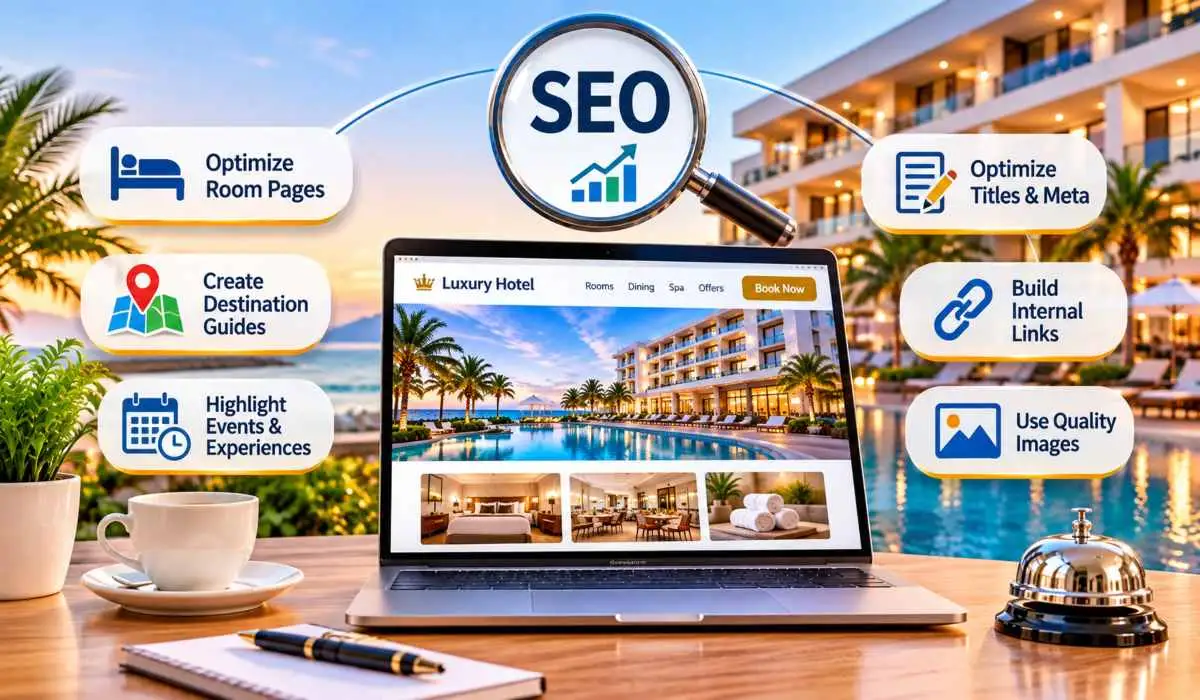
Room, rate and property pages should each describe one thing specifically and persuasively, because these are the pages closest to a booking. Give every room type its own page with original copy covering size, bed configuration, view, amenities and who it suits, rather than a thin paragraph repeated across categories.
Show clear starting rates or a prompt to check availability and surface your direct booking advantages, such as flexible cancellation or included extras, next to the booking button. Property level pages for facilities like the spa, restaurant or meeting rooms deserve the same treatment. Specific, factual detail helps search engines match your pages to precise queries and it answers the questions guests would otherwise take to an OTA.
Hotel landing page optimization
Hotel landing page optimization focuses on pages built for a specific audience or offer, such as a weekend break, a wedding venue or a seasonal package and on making them convert. Industry benchmark data compiled by Webtonic shows accommodation landing pages converting at 3.7%, compared with an all industry median of 6.6%, which suggests plenty of room for improvement.
The usual fixes are straightforward. Match the headline to the promise that brought the visitor, keep the page focused on a single action and place the booking prompt where it can be seen without scrolling. Add trust signals such as recent guest reviews and clear policies and remove navigation or clutter that pulls attention away from reserving. A landing page that speaks to one need almost always outperforms a general one.
Content that ranks destination guides, events, experiences
Destination guides, event pages and experience content rank because they answer the questions travellers ask before they choose where to stay. A guide to the best walks, restaurants or family days out near your property attracts people early in their planning and your hotel becomes the natural base for the trip.
Event pages for festivals, concerts or conferences capture short bursts of demand, while experience pages for activities such as wine tours or romantic breaks target guests with a clear motive. This content works best when it reflects genuine local knowledge, which sets it apart from the generic lists that OTAs and travel sites publish. Keep it updated and link each piece to a relevant room or package page so the interest turns into a booking.
Titles, meta data, internal links and images
Titles, meta descriptions, internal links and images are the small details that tell search engines what a page covers and persuade people to click. A page title should lead with the main topic and the location, stay short enough to display in full and read naturally. A meta description should summarise the page’s benefit in a sentence or two and give a reason to click.
Internal links should connect related pages with descriptive anchor text, moving guests from guides to rooms and from rooms to booking. Images should be compressed, named descriptively and given accurate alt text, which supports both accessibility and image search. Treating these elements consistently across every page is the core of effective on page SEO and it gives the other ranking factors a solid base to build on.
Technical SEO for Hotels
Technical SEO for hotels is the behind the scenes work that lets search engines crawl, understand and trust your website and lets guests use it without friction. It covers speed, mobile usability, structured data and site health and it determines whether your content and links can perform as they should. For specialist support on this layer, see our technical SEO service.

Site speed and Core Web Vitals
Site speed matters because slow pages frustrate guests and weaken your search performance. Google measures real world experience through Core Web Vitals, Largest Contentful Paint (how fast the main content appears, ideally within 2.5 seconds), Interaction to Next Paint (how quickly the page responds to taps and clicks, ideally under 200 milliseconds) and Cumulative Layout Shift (how stable the layout is while loading, ideally 0.1 or lower).
Hotel sites often struggle because of heavy hero images, video backgrounds and third party scripts such as chat widgets and trackers. The most effective fixes are compressing and properly sizing images, serving them in modern formats, lazy loading anything below the fold and removing scripts that no longer earn their place.
Mobile first booking experience
A mobile first booking experience means the full journey, from landing page to confirmed reservation, works smoothly on a small screen, because Google primarily uses the mobile performance of your site for indexing and ranking. The gap between traffic and bookings shows why this matters. One 2026 benchmark found that mobile drives about 65% of hotel traffic but converts at 1.82%, versus 3.14% on desktop.
Closing that gap usually comes down to practical details, a date picker that is easy to use with a thumb, a booking button that stays visible, readable text without zooming and a booking engine that loads as quickly as the rest of the site. Test the whole path on a real phone, not just a resized desktop window.
Schema markup (Hotel, LocalBusiness, FAQ, Review)
Schema markup is code that labels your content so search engines can read it with precision and for hotels the most useful types are Hotel, LocalBusiness, FAQ and Review. Hotel and LocalBusiness markup state facts such as your name, address, phone number, star rating, amenities and opening details in a consistent, machine readable format.
FAQ markup structures question and answer content, although Google now shows FAQ rich results for only a limited set of sites, so treat it as a clarity aid rather than a guaranteed enhancement. Review markup should be used carefully, since Google generally does not display star ratings for a business reviewing itself. Always validate your markup with Google’s Rich Results Test and make sure it matches what visitors can actually see on the page.
Crawlability, indexation and duplicate content
Crawlability and indexation determine whether search engines can reach your pages and choose to include them in results. Keep an up to date XML sitemap, make sure your robots.txt file isn’t blocking important sections and use Search Console’s page indexing report to see which URLs are excluded and why. Duplicate content is a frequent hotel problem.
Near identical room descriptions, filtered or parameter based URLs from booking tools and separate versions of the same page can split signals or confuse search engines. Canonical tags, consistent URL structures and unique copy for each room or offer resolve most of these cases.
Common hotel SEO issues and fixes
Most hotel SEO problems come from a handful of repeat issues that are easy to find and fix once you know where to look. Booking engines hosted on a separate domain can drain visibility, so connect them to your main site as seamlessly as possible and ensure the pages leading to them are strong.
Redirect chains and broken links left over from redesigns waste crawl effort and frustrate visitors and they should be replaced with direct, permanent redirects. Missing or duplicated title tags, oversized images and outdated pages for past events or expired offers also build up quietly. A scheduled audit every quarter, with a short fix list, keeps these problems from accumulating.
Google Hotel SEO and Local Visibility
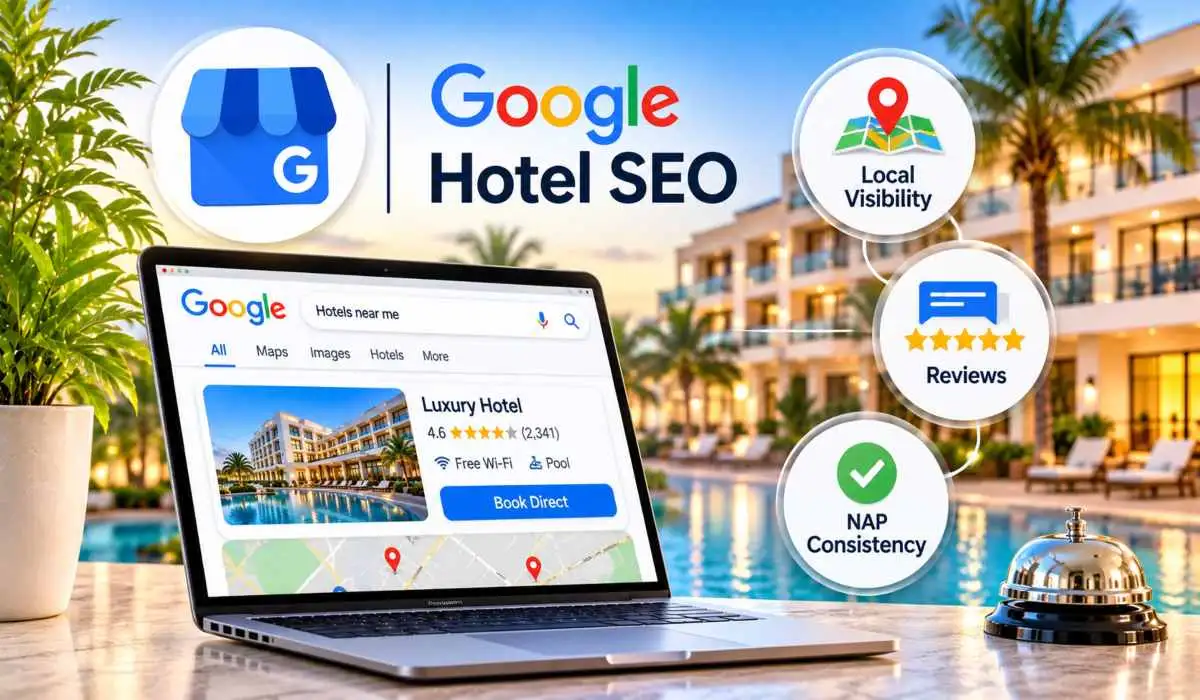
Google hotel SEO is the practice of optimizing your Business Profile, rate listings and guest reviews so your property appears in Google Search, Maps and Google Hotels and sends travellers to your own booking page. Local visibility depends mostly on a complete profile, accurate and live rates and a steady flow of genuine reviews. For hands on help with this layer, see our local SEO service.
Google Business Profile for hotel properties
A Google Business Profile is the free listing that shows your hotel’s details, photos and amenities in Google Search and Maps and for many guests it is the first impression of your property. Choose the most accurate primary category, fill in every available field (including amenities, check in and check out times and a clear description) and link to a dedicated booking or availability page. Add fresh, high quality photos regularly and monitor guest questions so wrong answers don’t stand uncorrected.
Rates deserve particular attention. Google’s help documentation says that free booking links send travellers to your own website to book directly and that self service rate entry ended in mid 2025, so rates now generally come through a connected booking engine or partner. Check that your system is feeding live prices and availability, because a link without current data produces clicks without reservations.
Google Hotels and how it differs from organic results
Google Hotels is a comparison tool for accommodation and it works differently from the standard organic results that list web pages. Organic results rank your website’s pages based on relevance, authority and experience. Google Hotels instead displays properties with dates, prices, filters and several booking options side by side, drawing on your profile, your rate and availability data and your reviews rather than your page copy.
Your direct booking link can appear there for free, while Hotel Ads are the paid option that can add extra visibility. Google doesn’t publish exactly how properties are chosen, so the practical approach is to control what you can, a complete profile, a connected rate feed and strong reviews. Treat it as a separate surface to manage alongside your website SEO, not a replacement for it.
Reviews, citations and NAP consistency
Reviews, citations and NAP consistency build the trust that decides both rankings and bookings. Guest feedback carries real commercial weight. TripAdvisor research reported by Webtonic in 2026 found that 79% of travellers would book the higher rated of two identical hotels. Ask every guest for a review after their stay with a direct link, respond to feedback professionally and never offer incentives in exchange for reviews, which Google’s policies prohibit.
Citations are mentions of your hotel’s details on directories, tourism boards and local sites. NAP stands for name, address and phone number and these should match exactly everywhere they appear, down to abbreviations and formatting. Inconsistencies, often left over from rebrands or moves, confuse search engines and can weaken your local visibility. A periodic check of your major listings keeps these details aligned.
SEO for Hotels in the Age of AI Search
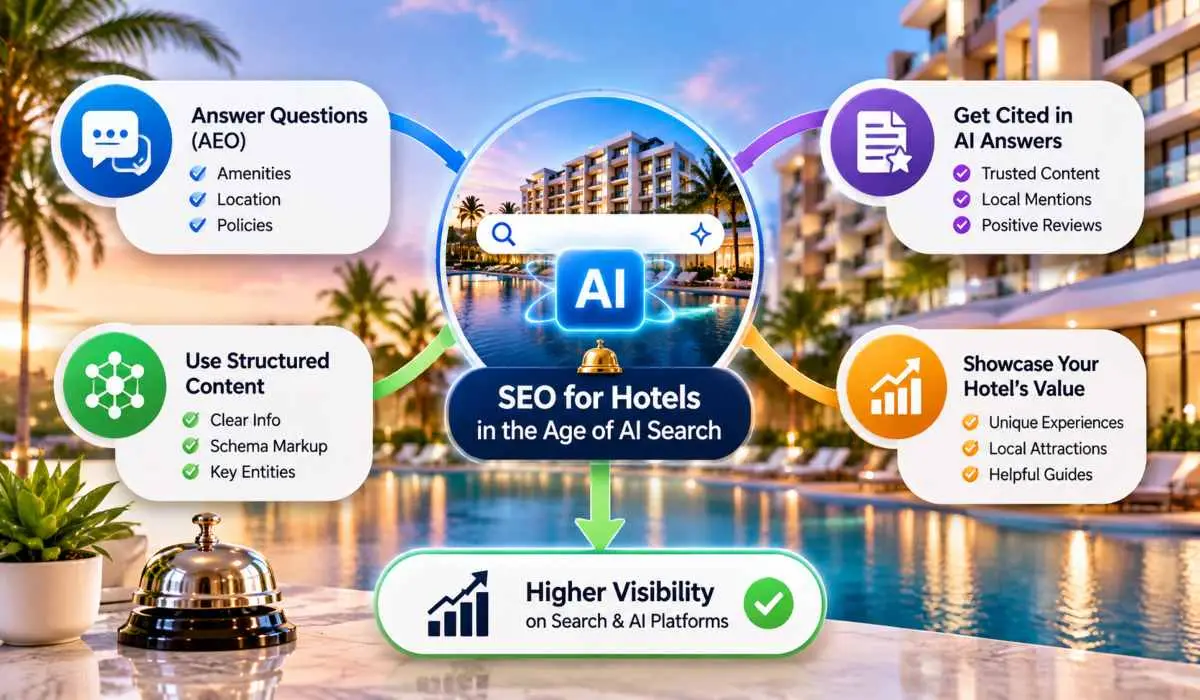
SEO for hotels in the age of AI search means making your property easy for AI tools to find, understand and recommend, as well as easy for traditional search engines to rank. The fundamentals still apply, but AI answers favour clear, factual, well structured information they can safely repeat.
Answer engine optimization (AEO) for hotels
Answer engine optimization is the practice of shaping your content so AI assistants and search features can extract a direct answer from it. This matters because traveller behaviour is already shifting. Phocuswright research reports that 56% of U.S. travellers now use AI in trip planning.
In practice, AEO for hotels means answering the questions guests actually ask in plain language, such as whether you allow pets, how far you are from the station, what time breakfast is served or whether parking is free. Place each answer near the start of the relevant page or section, state it in a sentence or two and then add detail. Pages that lead with a clear answer are easier for both people and machines to quote.
How to get your hotel cited in AI Overviews and ChatGPT style answers
Getting cited in AI answers depends on being accurate, consistent and visible in the sources these tools draw from and no one can guarantee a specific result. Start by making sure your core facts are identical everywhere they appear, your website, Google Business Profile, major directories and booking channels. AI tools compare sources and conflicting details make a property harder to recommend.
Earn mentions from credible local and travel sites, because third party coverage reinforces what your own pages claim. Keep reviews healthy and respond to them, since guest sentiment often shapes how a hotel is described. Publish original, specific content about your location and experiences that generic listings cannot match. For a deeper walkthrough, read our guide on how to rank on AI search engines.
Structured, entity rich content AI models can quote
Structured, entity rich content names the specific people, places and things your hotel relates to and presents them in a clear, consistent format that AI models can parse and quote. An entity is a distinct thing such as your hotel, your neighbourhood, a nearby landmark or a local event. When your pages name these clearly and connect them, for example by stating that the hotel is a short walk from a particular museum or station, models can place your property accurately in context.
Use descriptive headings, short self contained paragraphs and consistent naming for rooms, amenities and facilities. Support the text with structured data and simple tables for details such as room sizes and policies, so facts are unambiguous. Keep each section understandable on its own, since AI tools often lift a single passage rather than a whole page.
Hotel SEO Examples and Results
Hotel SEO examples show that well run campaigns typically produce measurable gains in organic traffic and direct enquiries within a few months, with larger revenue effects building over six to twelve months. The cases below are agency reported, so treat them as illustrations of what is possible rather than guarantees.
Example independent boutique hotel
An independent boutique hotel can see fast results when its pages are matched to how guests actually search. The Carlin, a five star boutique property in Queenstown, New Zealand, worked with Kiaora Digital to grow organic bookings. Room, suite and offer pages were optimised around guest search intent and the results were reported over a short window.
According to the agency’s case study, direct booking enquiries from organic search grew 41% within four months, keywords on page one of Google rose 49% and organic traffic increased 53%. The lesson for a similar property is that focusing on a defined audience, rather than trying to rank for everything, can move rankings and enquiries together.
Example multi property group
A multi property group benefits from scale, because a large set of well structured pages can capture a wide range of searches across locations. Coast & Country Hotel Collection, a group of hotels acquired by Bespoke Hotels, wanted to grow direct bookings and rely less on OTAs.
Working with agency Eskimoz on a full website SEO strategy, the group reported a 150% year on year increase in organic traffic within eight months, with more than 28,000 keywords ranking across over 1,000 pages. The takeaway for groups is that each property needs its own substantive pages and a consistent structure, so growth in one location supports the others rather than competing with them.
What realistic results and timelines look like
Realistic hotel SEO results arrive in stages, with early signals within the first few months and bigger commercial gains later. One hospitality web agency notes that for most hotel website projects, ranking improvements usually become visible within three to four months, while more significant organic traffic gains tend to appear between six and twelve months.
Several factors affect the pace, including the competitiveness of your destination, the age and authority of your domain, how much needs fixing technically and how consistently work is carried out. Seasonality also matters, because demand can mask or exaggerate progress. For that reason, compare results year on year rather than month to month and judge success by direct bookings and revenue from organic search, not rankings alone.
SEO for Different Property Types
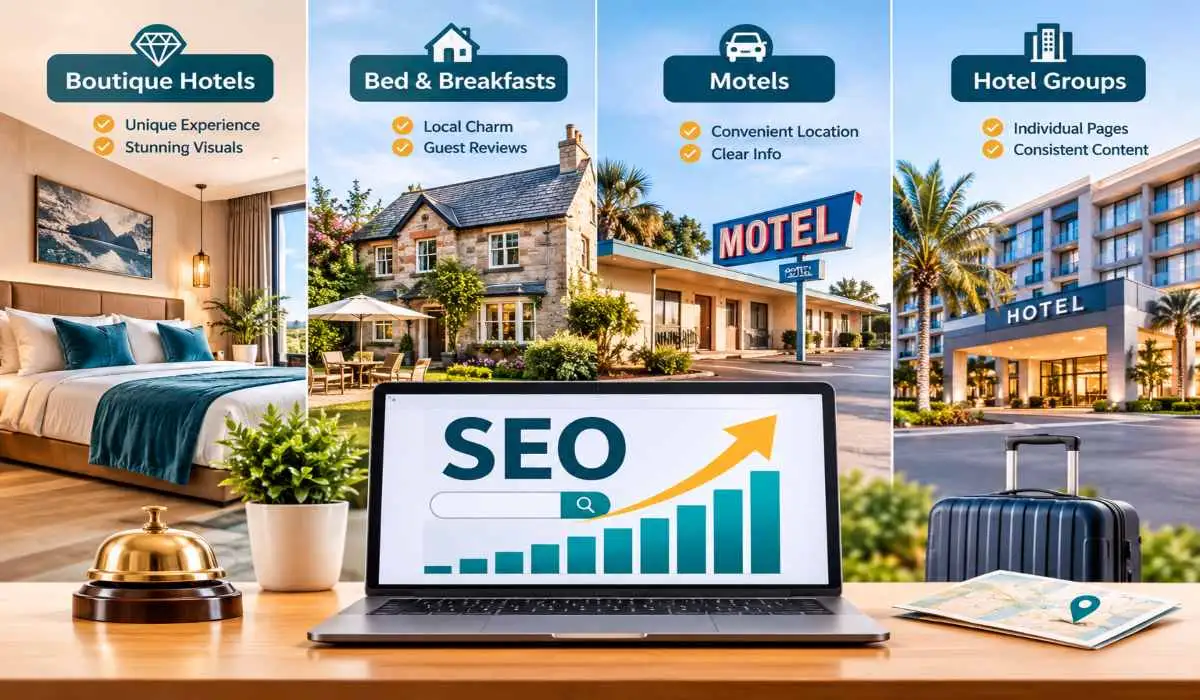
SEO for hotels works differently depending on the type of property, because each attracts different guests, searches and competitors. The core principles stay the same, but the priorities shift between boutique hotels, bed and breakfasts, motels and large groups.
Boutique hotels
SEO for boutique hotels should focus on what makes the property distinctive, because guests are choosing an experience rather than a standard room. Pages should capture the design story, the setting, the food and drink and the type of traveller the hotel suits, using specific language that mirrors searches such as “romantic boutique hotel near [landmark]”.
Strong photography, detailed room pages and press or influencer coverage all build the authority that helps a small brand compete with bigger names. Because boutique properties often sit in crowded destinations, targeting niche, experience led phrases usually brings better results than competing for broad terms that OTAs dominate.
Bed and breakfasts
SEO for bed and breakfasts depends heavily on personality, location and local visibility, since guests want a warm, trustworthy host and a sense of place. A complete Google Business Profile, plentiful and recent reviews and clear detail on breakfast, host, rooms and house rules carry a lot of weight.
Content about the surrounding area, such as walking routes, village events and local food, attracts travellers early in planning and shows knowledge that large chains cannot match. Many B&Bs have small websites, so keeping pages fast, mobile friendly and easy to book from is often the quickest route to improvement. Listing consistently on local tourism sites strengthens both citations and trust.
Motels
SEO for motels centres on practical, high intent searches from travellers who need a convenient place to stop. Many of these guests search on a phone, close to their travel time, with phrases like “motel near me” or “motel near [highway or town]”. That makes an accurate Google Business Profile, clear location details and quick loading mobile pages essential.
State the essentials plainly, rates, parking, pet policy, check in times and nearby facilities. Reviews that mention cleanliness, safety and value strongly influence these decisions, so respond to feedback promptly. Pages for nearby attractions, events or business hubs can add steady demand beyond passing trade.
Hotel groups and chains
SEO for hotel groups and chains requires a scalable structure that gives each property its own strong presence without creating internal competition. Every hotel should have a dedicated page set with unique content, accurate local details and its own Business Profile, while shared templates and consistent naming keep the whole site manageable.
Central teams need clear rules to avoid duplicate descriptions across locations and conflicting information in different channels. The reward for getting this right can be substantial. Ranked, an agency, reports that its work for Holiday Inn, which addressed a drop in organic traffic across worldwide locations, delivered a 75% year over year increase in organic traffic. Results like this are agency reported, but they show how much visibility a well organised multi location approach can recover.
Do It Yourself or Hire a Hotel SEO Specialist?
You can handle hotel SEO yourself if you have the time and are willing to learn and a specialist is worth hiring when your market is competitive, your time is limited or your site needs technical work. Many hotels do best with a hybrid, managing simple tasks in house while a specialist handles the heavy lifting and the strategy.
What an agency handles
A hotel SEO agency takes on the ongoing, specialised work that most hotel teams struggle to fit around daily operations. That typically includes technical audits and fixes, keyword research and page planning, content creation, link building outreach, Google Business Profile management and monthly reporting tied to bookings. It also brings tools, benchmarks and experience from other properties, which shortens the learning curve.
The work matters because search is only one of several routes guests take. SiteMinder’s 2026 research found that 18% of travellers who begin their search on an OTA go on to book directly with the hotel. Capturing that share depends on a website, brand presence and search visibility that hold up when guests compare options.
What to look for in a partner
The right partner understands hospitality, shows evidence and reports on the outcomes that matter to you. Ask for case studies with named results and clear timeframes and check whether the agency has worked with properties like yours, whether independent, boutique or multi location.
Look for transparency about the work itself, a defined scope, regular reporting on direct bookings and revenue from organic search rather than rankings alone and honest timelines. Be cautious of anyone who guarantees first page results or a fixed ranking, since search engines don’t allow that promise. Finally, confirm that they cover both traditional SEO and visibility in AI search, because guests increasingly use both when planning a stay.
Soft CTA to IT Leadz’s SEO and AI optimization services
If you’d like expert support, IT Leadz works with businesses across the US, UK and the Netherlands on search visibility and growth. Our SEO services cover the audits, content, technical fixes and authority building that help a hotel website attract more direct bookings and our AI optimization work helps your property show up where travellers now ask questions, as explained in our guide to how to rank on AI search engines. If you’re unsure where to start, a conversation about your current site, market and goals is a simple first step, with no obligation to commit.
Conclusion
SEO for hotels pays off when it brings guests to your own website instead of a booking platform that charges around 15% to 25% of the room rate in commission and the guide above comes down to three points. First, strong foundations decide your visibility, relevant content, credible links, accurate local signals and a fast, mobile friendly site must work together. Second, a clear process beats scattered effort, so audit your site, research what guests search for, prioritise the highest impact fixes, then execute and measure against direct bookings rather than rankings alone.
Third, the search landscape is widening, with Google Hotels, local listings and AI generated answers all shaping where guests find you, so consistent facts and clear, quotable content now matter as much as classic rankings. If you’d like an expert view of where your hotel stands today, IT LEADZ offers a free hotel SEO audit that reviews your website, search visibility and local presence and shows you the clearest opportunities to win more direct bookings. Get in touch to request yours.
Frequently Asked Questions (FAQs)
What is SEO in the hotel industry?
SEO in the hotel industry is the practice of optimizing a hotel’s website, Google Business Profile and online reputation so the property ranks well in search results and AI answers when travellers look for somewhere to stay. The aim is to win more direct bookings and reduce reliance on booking platforms that charge commission.
How long does hotel SEO take?
Hotel SEO usually shows early results within a few months and larger commercial gains later. One hospitality web agency notes that ranking improvements typically become visible within three to four months, with more significant organic traffic gains between six and twelve months. The pace depends on how competitive your destination is, how established your website is and how consistently the work is carried out.
How much does SEO cost for a hotel?
The cost of hotel SEO varies widely with the scope of work, the competitiveness of your market, the number of properties and whether you use an in house hire, a freelancer or an agency. Most providers charge a monthly retainer or a project fee, so ask for an itemised proposal that shows exactly what is included and how results will be reported. A useful way to judge value is to compare the investment with the commissions you currently pay on OTA bookings.
Is SEO better than paid ads for hotels?
Neither is better in every case, because they do different jobs. Paid ads deliver visibility immediately but stop when the budget stops, while SEO takes longer to build and keeps attracting guests without a fee for each click, so its cost per booking tends to fall over time. Most hotels do best using SEO as the long term foundation and paid campaigns for peak seasons, new offers or quick boosts.
What is technical SEO for hotels?
Technical SEO for hotels is the work that helps search engines crawl, understand and trust your website and helps guests use it smoothly. It covers site speed, mobile usability, crawlability and indexation, structured data and fixing issues such as duplicate pages, broken links and redirect problems. Strong technical foundations allow your content and links to perform as they should.
How do I get my hotel to show up in AI search?
To show up in AI search, keep your hotel’s facts identical across your website, Google Business Profile and major directories and answer common guest questions plainly in clearly labelled sections. Earn credible mentions from local and travel sites, keep reviews healthy and use structured data to remove ambiguity. No tactic can guarantee a citation, but accuracy, consistency and clarity give AI tools the confidence to recommend you.